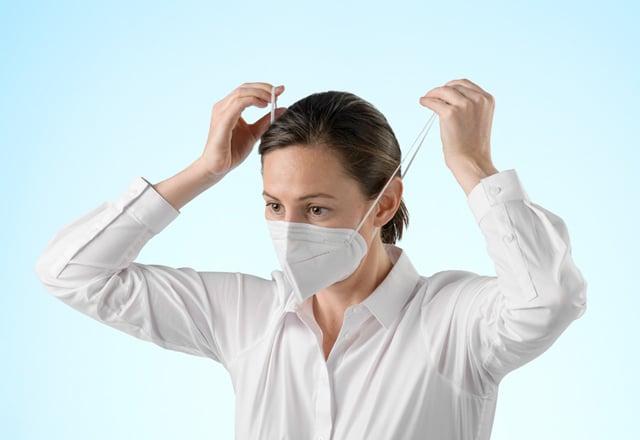



There’s no denying that the COVID-19 pandemic increased demand for PPE across healthcare. In fact, the demand for this medical protective equipment was so great that it led to global shortages, challenging the healthcare industry and threatening supply chains.
It also highlighted another key issue: the environmental impact of PPE. This made it clear that sustainability objectives needed to be integrated proactively to address ecological concerns without compromising frontline workers' safety.
Detmold Medical’s sustainability initiatives are leading the way in sustainable PPE solutions by using responsibly sourced materials and maintaining transparent supply chains. Read on as we outline why striking the right balance between protection and environmental impact is essential for the future of healthcare PPE.
Why is reducing the environmental impact of PPE important?
Organisations around the world recognise the vital role PPE has in keeping healthcare workers and other members of the community safe. However, the COVID-19 pandemic saw increased equipment use, underscoring the need to improve health waste management processes.
Environmental issues arising from increased consumption of healthcare equipment include single-use plastics, landfill volume, resource consumption, and emissions from imported PPE. Because of these concerns, there is growing pressure and responsibility on healthcare systems, PPE manufacturers, and procurement teams to take proactive steps to reduce their environmental impact.
As a result, healthcare companies are required to link their sustainability goals to regulatory and industry expectations. The Australian Commission on Safety and Quality in Healthcare outlines environmentally sustainable infection prevention and control (IPC) practices that provide guidance for healthcare companies. This includes advice on sustainable glove use, emphasising environmental sustainability and patient safety.
How can PPE manufacturers maintain safety standards while being sustainable?
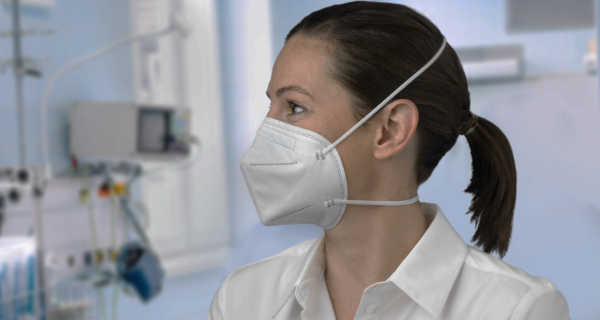
Safety should never be compromised when it comes to healthcare. It’s critical to source TGA-approved, hospital-grade PPE. However, there are ways to control your environmental impact by understanding how product design, controlled manufacturing, and material selection can support both safety and sustainability.
For example, choosing a supplier that uses responsibly-sourced materials, energy-efficient processes, or ergonomic design can contribute to your sustainability goals while maintaining the highest level of safety.
By making a genuine commitment to sustainability in healthcare procurement, you can be confident that your supplies will protect those who rely on them and showcase your dedication to sustainable practices across every stage of the supply chain. Transparent traceability ensures you understand the entire product journey, bolstering your credibility and avoiding greenwashing claims against your business.

What innovations are improving the sustainability of face masks and respirators?
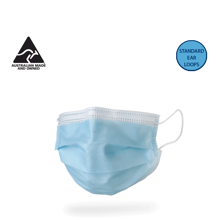
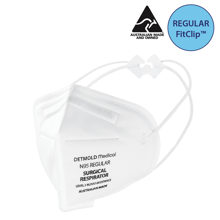
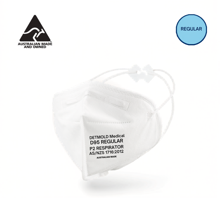
The good news is there’s a path to a better tomorrow without compromising on safety. Some product advances include eco-friendly face masks and respirators made from lower-impact materials, such as degradable polymers and natural fibres, rather than traditional plastics.
What about other initiatives in the medical supply industry? We’ve outlined some further ways the sector is innovating below:
Lightweight materials that reduce resource use while maintaining filtration performance.
- Energy-efficient manufacturing processes.
- Recyclable or partially recyclable mask components.
- Reduced packaging or recyclable packaging solutions.
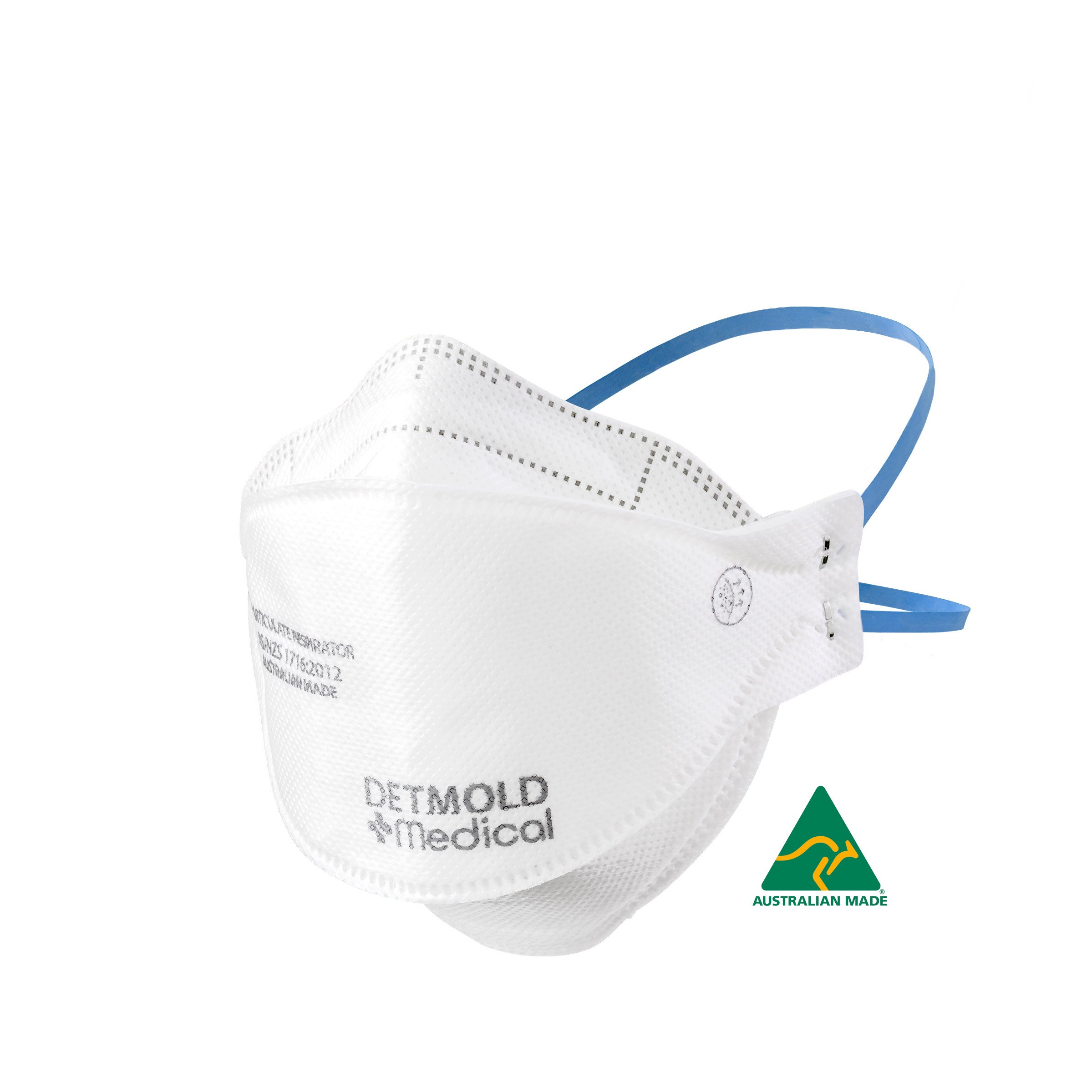
At Detmold Medical, we’re committed to shaping a sustainable and safe future for the PPE supply industry through:
- Minimised waste during production.
- Recyclable packaging.
- Design improvements that reduce material use without undermining protection.
But our commitment to a more sustainable future doesn’t stop there. We’re dedicated to ongoing improvement and innovation throughout our design and manufacturing process. By investing in continuous research into circular solutions, such as recycling PPE materials and refined designs, you can be confident in how your face masks and respirators are made.
How does Australian-made PPE reduce emissions and waste?
Australian-made PPE reduces emissions and waste, as locally made products avoid transport-related emissions. Local production also means faster production and greater supply responsiveness, reducing over-ordering, stockpiling, and expiry-related waste.
You can also rely on consistent quality and safety due to controlled onshore processes and tight quality control procedures that may not be as stringent with an offshore supplier.
At Detmold Medical, we take our sustainability initiatives seriously while still maintaining the highest levels of safety. Here’s how:
- Local production facility with efficient energy and waste management.
- Partnerships supporting recycling trials and responsible resource use.
- Commitment to continuous improvement and innovation.
What steps can healthcare facilities take to make PPE use more sustainable?
So, what steps can healthcare facilities take to feel confident in their PPE, both from a safety and sustainability perspective? Practical recommendations for hospitals, clinics, and aged care providers include:
- Choosing certified sustainable PPE solutions from trusted suppliers.
- Implementing recycling programs where available.
- Reducing unnecessary PPE usage through correct training and procurement planning.
- Switching to locally manufactured PPE to reduce transport emissions.
- Engaging with suppliers who demonstrate measurable sustainability reporting.
- Highlighting the importance of sustainability in healthcare procurement policies.
Sustainability and safety are not mutually exclusive
When determining your PPE supplier, it’s essential to consider both safety and sustainability. It comes down to striking the right balance, and it’s critical to consider how innovation, responsible manufacturing, and smart procurement can significantly reduce environmental impact.
Healthcare organisations need to be dedicated to a sustainable future for PPE by aligning themselves with responsible manufacturers with proven sustainable practices. Detmold Medical is committed to developing safer, lower-impact solutions for healthcare. With strong sustainability objectives and a culture built on continuously improving outcomes for our customers, you can rely on Detmold’s quality products to meet your safety and sustainability expectations.